Essential Gym Growth KPIs You Need to Track for Success
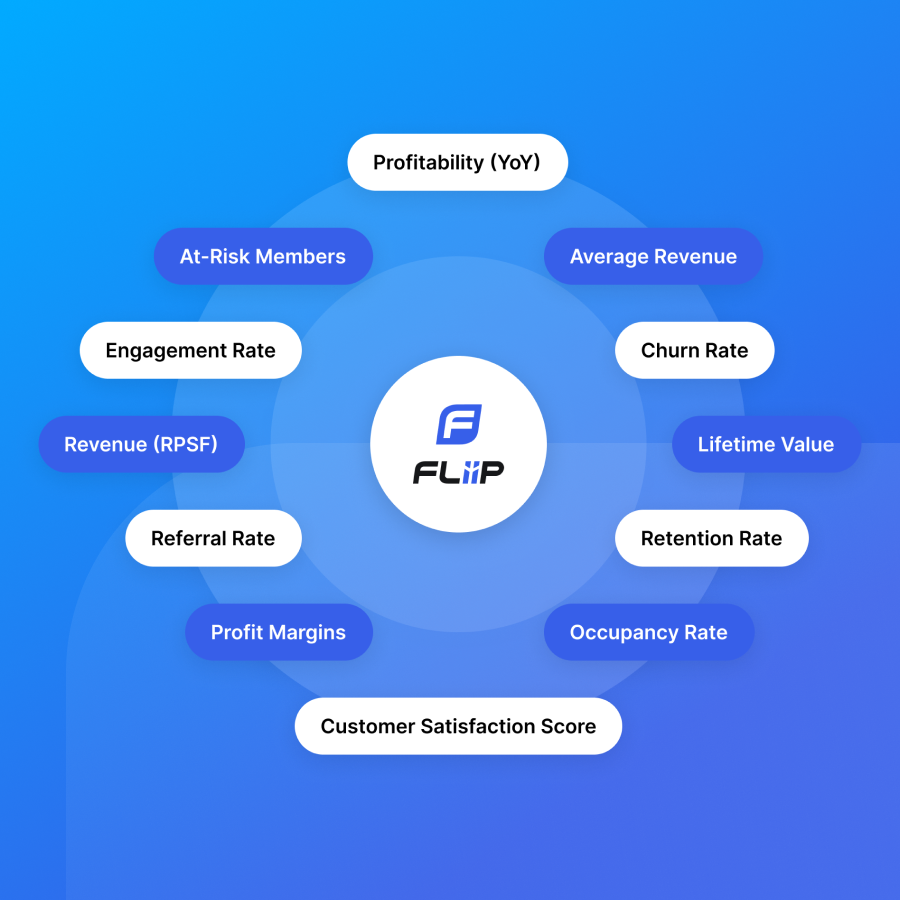
As a studio or training center owner, you know that tracking certain data, especially gym growth KPIs, is essential for driving business growth. However, it’s not always easy to know which metrics matter most. How do you determine the cause-and-effect relationships between them? How often should you analyze them, and when is it time to make comparisons?
To help guide your growth, here are the gym growth KPIs that are crucial to analyze to take your business to the next level.
Year-Over-Year Sales and Profitability (YoY)
Revenue is probably the most common metric you track, but are you looking beyond just the sales total?
To ensure your growth is on track, you need to compare sales to the same period from previous years. But don’t rely solely on last year’s data, monthly fluctuations are normal and shouldn’t set off alarms. However, if your revenue differs significantly from the same period in the previous year, it’s time to dive deeper. Has your average revenue per user (ARPU) dropped? Have you seen growth in memberships but a decrease in services?
Tracking these gym growth KPIs by department will help you understand where the changes are coming from. This breakdown also allows you to forecast revenue for future years, which helps in planning investments or hires needed to keep members happy.
Setting clear sales goals at the start of each year is a great way to challenge yourself and your team. If you see stagnation, don’t hesitate to get creative, run special promotions, organize competitions, or offer workshops. Keeping track of gym growth KPIs like YoY sales and profitability ensures you’re always moving forward.
Average Revenue Per User (ARPU)
It’s not the number of members that drives growth, it’s how much each member spends. That’s where ARPU (average revenue per user) comes in, one of the most important gym growth KPIs.
To calculate ARPU:
Divide your total monthly revenue by the number of members during that period.
ARPU = Total Revenue / Number of Customers
This metric allows you to assess how much each member contributes to your overall revenue. It also helps you evaluate the value of your new members compared to existing ones, and even compare membership tiers. For example, if your entry-level memberships drag down your ARPU, you might need to reconsider their value.
By tracking ARPU consistently, you can better understand the financial health of your studio and optimize your pricing strategies to increase revenue. Coupled with other gym growth KPIs, ARPU will give you deeper insights into your business’s performance.
Churn Rate
Churn, the rate at which members leave your studio, is a critical metric in the world of subscriptions. Keeping your churn rate low is one of the most vital gym growth KPIs to monitor.
Here’s how to calculate your churn rate:
Churn Rate = (Members Lost / Total Members) x 100
If your studio loses 7 members out of 300 in a month, your churn rate would be 2.3%. Ideally, you want to keep it well below the industry average of 30% annually (around 2.5% per month). A higher churn rate means you’re struggling to retain clients, and since acquiring new members costs five times more than retaining existing ones, focusing on reducing churn can directly impact growth.
Reducing churn isn’t just about saving money, it’s about increasing customer satisfaction. Offering personalized experiences, staying engaged with members, and regularly asking for feedback can help you lower your churn rate. By improving this key gym growth KPI, you’ll improve your retention rates and grow your revenue more sustainably.
Learn More: 9 Effective Gym Member Retention Strategies
Lifetime Value (LTV) and Customer Acquisition Cost (CAC)
Another essential pair of gym growth KPIs are Lifetime Value (LTV) and Customer Acquisition Cost (CAC). These metrics work together to give you a clear picture of the financial return each member brings over time and how much it costs to acquire them.
LTV is calculated by dividing ARPU by your churn rate:
LTV = ARPU / Churn Rate
Members with a high LTV contribute the most to your business. These are the ones who stay with you the longest, buy additional services, and refer new clients. Focusing on increasing LTV can significantly boost profitability.
On the flip side, knowing your CAC helps you determine if your marketing and sales efforts are cost-effective. Ideally, your LTV-to-CAC ratio should be at least 3:1 to maintain a healthy growth trajectory. Calculating these gym growth KPIs allows you to optimize spending on customer acquisition and identify the best-performing channels.
At-Risk Members (Inactive or Dissatisfied)
Identifying at-risk members is another key to managing growth. These are clients whose engagement has dropped (e.g., inactive for over 14 days), those who haven’t renewed their membership, or those who left negative feedback. By focusing on gym growth KPIs like engagement and retention, you can proactively work to win these members back before they churn.
Reaching out to at-risk members regularly with special offers, personalized support, or even just checking in to see how they’re doing can make a big difference. Using surveys and reviews as a feedback tool will also give you deeper insights into what’s working and what needs improvement.
Member Retention Rate
While churn rate focuses on how many members are leaving, member retention rate tells the opposite story: how many stay. This KPI is essential because it directly impacts your bottom line. The higher your retention rate, the better your business keeps customers satisfied.
Retention Rate Formula:
Retention Rate = ((Total Members at End of Period - New Members During Period) / Total Members at Start of Period) x 100
Tracking both churn and retention gives a fuller picture of how well your studio keeps members engaged and happy. A high retention rate is often a sign of strong customer relationships and effective engagement strategies.
Learn More: The Science of Habit: Increasing Gym Attendance and Retention
Class/Session Occupancy Rate
For studios that rely heavily on group classes or personal training sessions, the occupancy rate for each class or session is a vital growth KPI. It tells you how efficiently you are using your available resources (classrooms, trainers, time slots) and whether there’s room for optimization.
Class Occupancy Rate Formula:
Occupancy Rate = (Number of Attendees / Class Capacity) x 100
If your classes or sessions consistently run below capacity, you can experiment with adjusting schedules, improving marketing efforts, or introducing new types of sessions to better meet demand.
Profit Margins
Revenue is important, but profit margins give you a clearer view of how much money your gym is actually making after covering costs. This KPI helps you track profitability and figure out where you can cut unnecessary expenses to boost your bottom line.
There are two types of profit margins you can monitor:
- Gross Profit Margin: Focuses on profit after deducting costs directly tied to delivering services (e.g., trainer salaries, equipment maintenance).
- Net Profit Margin: Considers all operating costs, including rent, utilities, and marketing expenses.
Customer Satisfaction Score (CSAT)
Customer feedback plays a huge role in the health of your business. Monitoring customer satisfaction scores (CSAT) can help you understand the level of satisfaction among your current members. Use surveys and feedback tools to ask members how satisfied they are with your services.
A common method is to ask members to rate their experience on a scale (e.g., 1 to 5) after attending a class or interacting with your staff. CSAT scores help you identify areas for improvement and can directly influence retention and churn rates.
Referrals and Referral Rate
Satisfied members who refer their friends and family to your gym are one of the most effective sources of growth. Tracking your referral rate tells you how often your existing members are bringing in new clients, which is a sign of strong member satisfaction.
Referral Rate Formula:
Referral Rate = (New Members from Referrals / Total New Members) x 100
Encourage referrals by offering incentives, such as discounts or free sessions, to both the referrer and the new member. A high referral rate is a sign that your gym is building a loyal, engaged community.
Active Member Engagement Rate
This gym growth KPI measures how often your members actively engage with your gym’s services, like attending classes, using personal training, or participating in workshops. The more frequently members engage, the more likely they are to stay long-term.
Track engagement through:
- Attendance rates at classes or sessions
- Participation in events or workshops
- Usage of on-demand or virtual content (if applicable)
Upsell and Cross-Sell Metrics
For studios with multiple service offerings (e.g., personal training, nutrition counseling, retail products), tracking upsell and cross-sell performance is crucial. These metrics show how successfully you are getting members to buy more than just a basic membership.
Monitor the percentage of members who upgrade to premium memberships or purchase additional services. This is a great indicator of how well you maximize revenue per customer, which directly ties back to ARPU.
Learn More: Upselling Strategies to Increase Your Gym’s Revenue
Revenue Per Square Foot (RPSF)
If you're running a physical space, especially if it’s smaller, Revenue Per Square Foot (RPSF) is an important KPI. It helps you understand how efficiently you use your facility to generate income. RPSF is especially useful for determining whether you’re getting enough out of your facility regarding member usage, services offered, and overall profitability.
RPSF Formula:
RPSF = Total Revenue / Total Square Footage of Your Gym
Low RPSF could indicate you have too much-unused space or that certain areas aren’t being monetized efficiently.
Conclusion
Tracking the right gym growth KPIs is essential for taking your studio or training center to the next level. By monitoring key metrics like year-over-year sales, average revenue per user (ARPU), churn rate, lifetime value (LTV), and acquisition cost (CAC), you gain a clear understanding of your studio's performance and can make more informed decisions to drive growth.
Additionally, keeping an eye on member retention, class occupancy, profit margins, and customer satisfaction helps you address weaknesses and seize opportunities to optimize your operations. Ultimately, these KPIs will serve as a roadmap to improve profitability, boost member satisfaction, and ensure long-term success.
By using these indicators consistently, you’ll be better equipped to scale your business, forecast growth, and create a thriving, loyal member base. So, start tracking these gym growth KPIs today, and watch your studio transform from good to great!