Opening a Gym Franchise vs. Starting Your Own Gym: Which One Is Right for You?

Owning a gym is a big decision, one that goes beyond just loving fitness. Whether you build a gym from scratch or open a gym franchise, you’re making a long-term business investment. And while both paths can lead to success, they come with very different challenges, financial commitments, and levels of control.
Starting an independent gym means doing everything yourself, from picking a name and designing the space to figuring out marketing, pricing, and operations. It’s your brand, your vision, and your rules. But that also means you’re on your own when it comes to attracting members, covering costs, and competing with big-name gyms.
On the other hand, opening a gym franchise gives you a built-in brand, corporate support, and a proven business model. You don’t have to guess what works, it’s all laid out for you. But that comes at a price: franchise fees, ongoing royalties, and less flexibility in how you run the business.
So how do you decide? It all comes down to what kind of business you want to run, how much risk you’re willing to take, and whether you want total freedom or a structured system to follow.
What It Takes to Start an Independent Gym
Starting your own gym means building everything from the ground up. There’s no corporate team giving you a playbook or telling you what equipment to buy, you’re in charge of every decision, big and small. That kind of control can be exciting, but it also means more responsibility and risk.
Creating a Brand That Stands Out
Unlike opening a gym franchise, where branding is already in place, an independent gym requires you to develop everything from scratch:
- Business name, logo, and visual identity
- Gym layout, equipment selection, and membership model
- Unique selling proposition, what makes your gym different from competitors?
With corporate gym chains and franchises dominating the market, standing out is tough. A successful independent gym needs a strong niche, whether that’s functional fitness, strength training, recovery-based fitness, or a premium, high-touch experience. If your gym is too generic, you’ll struggle to pull members away from well-known brands.
Finding the Right Location and Securing Funding
Location is everything in the fitness industry. A great gym in the wrong area will fail, no matter how good the equipment or trainers are. Before signing a lease, independent gym owners need to research:
- Demographics – Is there enough demand for the type of gym you want to open?
- Competition – Are there already too many gyms nearby?
- Visibility and accessibility – Can people easily find and access your gym?
Once the location is locked in, funding is the next hurdle. Opening a gym is expensive, and without corporate backing, independent gym owners need to cover everything themselves. Most startup costs include:
- Leasehold improvements and buildout – $50,000 to $300,000+ depending on the size and condition of the space.
- Equipment purchases – $50,000 to $500,000 depending on quality and specialization.
- Initial marketing and branding – $10,000 to $50,000 to launch effectively.
- Staffing and payroll – Varies based on gym size and services offered.
Without a solid financial plan and access to funding, many independent gyms fail before they even open. Unlike opening a gym franchise, where lenders are often more willing to provide financing due to brand stability, independent gym owners have to convince banks or investors that their concept will work.
Building a Membership Base from Scratch
No matter how great your gym looks, it won’t survive without members. Unlike franchise gyms that benefit from brand recognition and national marketing, independent gym owners have to work harder to attract and retain members. That means:
- Creating and running marketing campaigns, social media, local advertising, referral programs.
- Offering promotions and discounts to generate interest.
- Building partnerships with local businesses and community groups.
The hardest part? Keeping members long-term. Retention is one of the biggest struggles for independent gyms, especially when competing with big-box gyms and fitness franchises that have lower prices and bigger marketing budgets.
The Risks and Rewards of Going Independent
Owning an independent gym gives you full control over your business, but it also comes with higher risk. You have to create the brand, handle operations, and compete without corporate support. If done well, an independent gym can be highly profitable and allow for total creative freedom. But if it fails, there’s no safety net.
For entrepreneurs who want to build something truly unique, an independent gym can be a great investment. But for those looking for a structured business model with built-in support, opening a gym franchise may be the smarter choice.
Learn More: The Best 10 Commercial Gyms in the US
The Business Model of Opening a Gym Franchise
For many aspiring gym owners, opening a gym franchise offers a way to enter the fitness industry with a proven business model, brand recognition, and corporate support. Instead of starting from scratch, franchisees invest in an established fitness brand and follow its blueprint for success. But that doesn’t mean it’s a hands-off business, franchisees are still responsible for managing daily operations, keeping members engaged, and ensuring profitability.
How a Gym Franchise Works
When you open a gym franchise, you’re essentially buying the rights to operate under a well-known brand. This means you get:
- A licensed use of the brand’s name, logo, and business systems.
- A structured training program to learn how to run the gym efficiently.
- Access to the franchise’s preferred equipment, vendors, and technology.
- Built-in corporate marketing support to help attract members.
In exchange, franchise owners must:
- Pay an initial franchise fee (typically ranging from $50,000 to $250,000).
- Pay ongoing royalty fees (usually a percentage of monthly revenue).
- Follow corporate guidelines for pricing, branding, and operational procedures.
While franchisees benefit from corporate backing, they don’t have full control over their business. Unlike independent gym owners who can experiment with pricing and marketing, franchisees must stick to corporate-approved policies.
The Trade-Off Between Support and Control
One of the biggest reasons people choose opening a gym franchise over starting an independent gym is the support system. Instead of figuring everything out on their own, franchisees receive:
- Pre-opening training to understand the business model.
- A playbook for hiring, marketing, and member retention.
- On-demand corporate support for troubleshooting business challenges.
However, this comes with trade-offs. Unlike independent gym owners, franchisees can’t make major changes to branding, pricing, or services. If corporate decides to increase membership fees or introduce new policies, franchise owners must comply, even if they disagree.
The Startup Investment for a Gym Franchise
Franchises require significant upfront capital, but they also make financing easier since lenders are more likely to approve loans for an established brand. Typical costs include:
- Franchise fee – $50,000 to $250,000 (one-time payment).
- Equipment and buildout – $100,000 to $500,000 (varies by gym size and brand requirements).
- Royalty fees – 4% to 8% of monthly revenue (ongoing).
- Marketing fees – 1% to 3% of monthly revenue (corporate-led campaigns).
The advantage? Unlike independent gym owners, franchisees don’t have to experiment to find the right business model. The brand already has a proven system that works, reducing the trial-and-error phase that many independent gyms struggle with.
Marketing and Member Acquisition
One of the biggest benefits of opening a gym franchise is brand recognition. Instead of building awareness from scratch, franchisees tap into a name that members already know and trust. Many gym franchises handle national marketing, running large-scale ad campaigns that individual owners couldn’t afford on their own.
That said, franchisees still have to do local marketing. While corporate provides materials, gym owners are responsible for:
- Local social media and digital advertising.
- Community partnerships and referral programs.
- Grassroots promotions to attract nearby members.
A franchise’s marketing support gives gym owners an advantage, but it doesn’t guarantee success. If a franchise owner doesn’t actively engage with their local market, their gym could struggle, despite the brand recognition.
Is a Gym Franchise a Good Investment?
For those who want a structured path into the fitness industry, opening a gym franchise can be a great option. It provides:
- A proven business model to follow.
- A trusted brand with built-in credibility.
- Ongoing corporate training and support.
However, it’s not the best fit for everyone. Franchisees must be comfortable following corporate policies, paying ongoing royalties, and giving up some level of control. If you’re an entrepreneur who wants full creative freedom, an independent gym might be a better choice.
Learn More: Everything You Need to Know About Gym Franchises in 2025
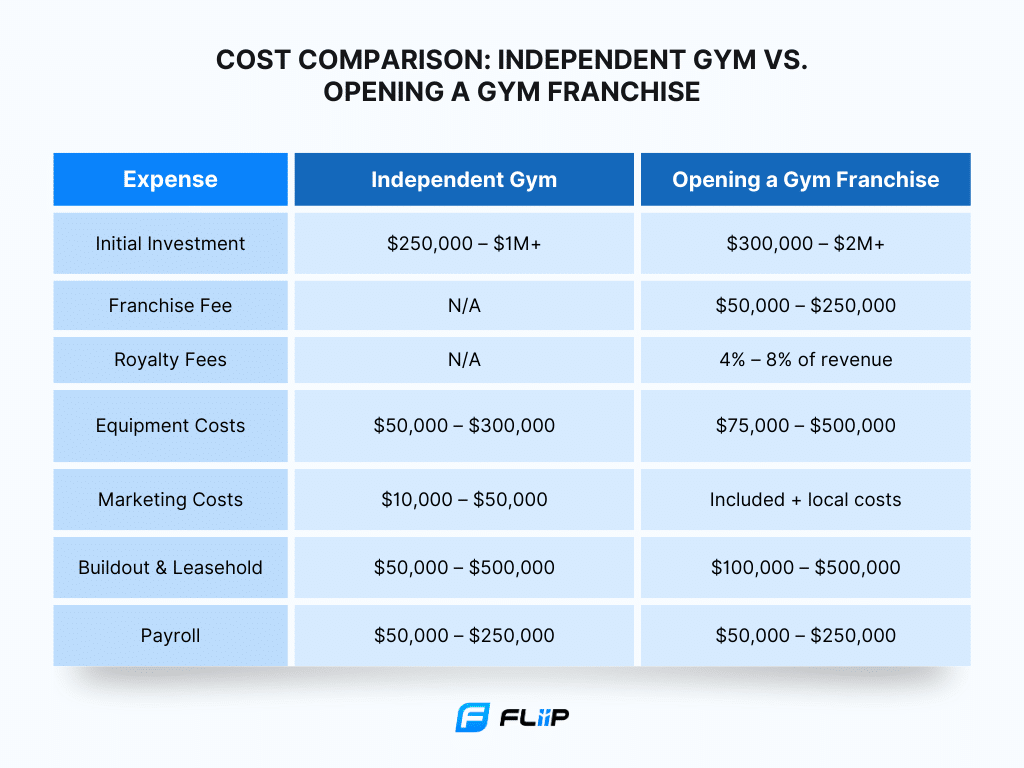
Startup Costs: Independent Gym vs. Opening a Gym Franchise
One of the biggest factors in deciding between starting an independent gym and opening a gym franchise is the cost. Both require significant investment, but the financial structures are very different.
Independent gym owners must fund everything themselves, while franchisees pay for a brand name and structured support but also have ongoing fees. Understanding the full cost breakdown will help you decide which model fits your budget and financial goals.
Independent Gym Costs: Full Financial Responsibility
Starting an independent gym means covering all expenses out of pocket or securing financing from banks, investors, or personal savings. The costs vary depending on location, size, and gym concept, but here’s a general breakdown:
1. Location and Buildout Costs
- Leasing a space: $5,000 to $30,000 per month, depending on location and size.
- Buildout and renovations: $50,000 to $500,000 (flooring, lighting, locker rooms, etc.).
2. Equipment Costs
- Basic gym setup (cardio machines, free weights, racks): $50,000 to $300,000.
- Specialty equipment (recovery stations, smart tech, functional training setups): $30,000 to $100,000.
3. Marketing and Branding
- Logo, website, signage, and promotional materials: $5,000 to $20,000.
- Digital and local advertising: $10,000 to $50,000 (initial launch campaigns).
4. Staffing and Payroll
- Hiring trainers, front desk staff, and managers: $50,000 to $250,000 annually.
- Payroll taxes and benefits: Varies based on employees and business structure.
5. Business Operations and Licensing
- Business registration, insurance, and permits: $5,000 to $20,000.
- Gym management software and access control: $200 to $1,500 per month.
Estimated total cost to start an independent gym: $250,000 – $1,000,000+ depending on location, size, and gym concept.
Franchise Gym Costs: Higher Buy-In, Structured Support
Franchisees pay for the right to operate under an established brand, which includes upfront fees and ongoing costs. The total investment depends on the franchise brand, location, and required buildout.
1. Franchise Fees and Royalties
- Initial franchise fee: $50,000 to $250,000 (one-time payment).
- Ongoing royalty fees: 4% to 8% of monthly revenue.
- National marketing fees: 1% to 3% of monthly revenue.
2. Location and Buildout Costs
- Leasing a space: $5,000 to $30,000 per month, depending on location.
- Buildout and renovations: $100,000 to $500,000, depending on franchise requirements.
3. Equipment and Technology
- Pre-approved equipment package: $75,000 to $500,000.
- Gym management software and corporate tech integration: Usually included in franchise fees.
4. Marketing and Advertising
- Corporate-led national advertising: Covered by marketing fees.
- Local advertising (social media, community events): $5,000 to $30,000 per year.
5. Staffing and Payroll
- Hiring costs: $50,000 to $250,000 annually.
- Corporate-mandated training and onboarding: Usually covered in franchise costs.
Estimated total cost to open a gym franchise: $300,000 – $2,000,000+, depending on brand, location, and buildout requirements.
Which Model Offers Better Financial Returns?
- Independent gym owners keep 100% of their revenue but have higher upfront risks and operating costs.
- Franchise owners pay royalties but benefit from brand recognition and corporate support.
- Banks and investors are often more willing to finance a franchise gym since they have a lower failure rate.
For those who want total financial control and creative freedom, an independent gym can be more profitable in the long run, but it comes with more risk. Opening a gym franchise can provide a smoother path to profitability for those who prefer a structured system and corporate backing, despite the added fees.
Learn More: What Is the Difference Between a Corporate Gym and a Gym Franchise?
Branding and Marketing: DIY vs. Built-In Recognition
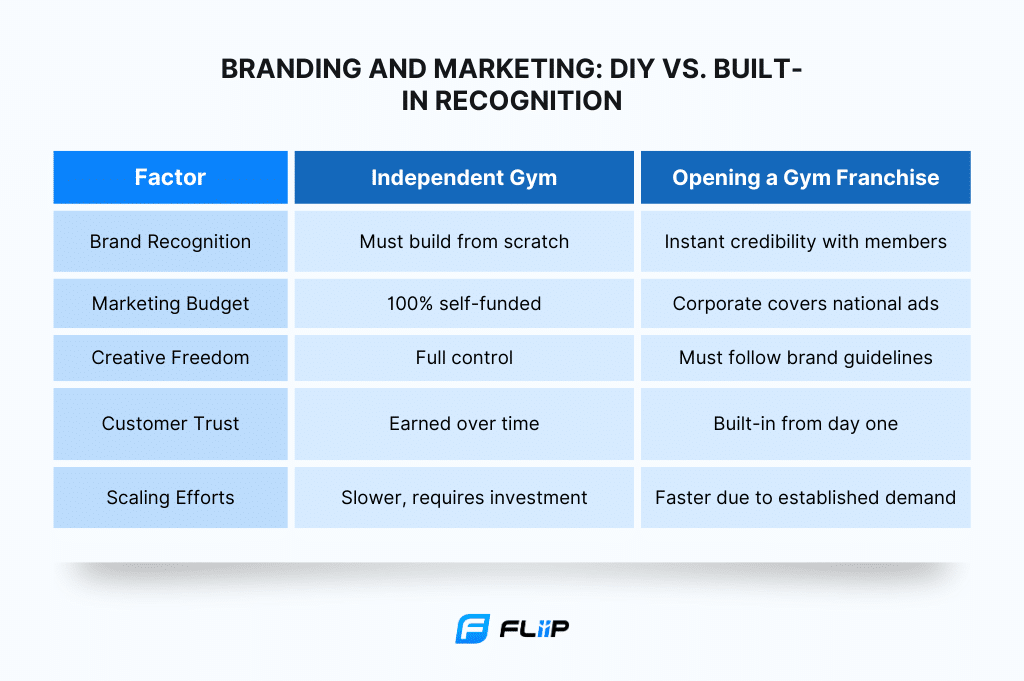
Whether you're opening an independent gym or a gym franchise, attracting and keeping members is the key to long-term success. The difference? Independent gyms start from scratch, while franchises benefit from brand recognition and corporate marketing support.
A great facility doesn’t guarantee success, members need a reason to choose your gym over the competition.
Branding an Independent Gym: Building from the Ground Up
When starting an independent gym, everything about the brand is up to you, which can be a blessing or a challenge.
Creating a Unique Brand Identity
- Designing the logo, color scheme, and gym aesthetic.
- Defining a niche (boutique, strength-focused, high-end, community-driven).
- Developing a gym culture that stands out from competitors.
Building Awareness and Reputation
- Since no one knows your gym yet, you have to build trust and credibility from scratch.
- Customer reviews and word-of-mouth play a huge role in attracting new members.
Running Marketing Campaigns from Scratch
- Local social media ads, Google ads, and referral incentives are essential.
- Partnerships with local businesses, schools, and community organizations help generate leads.
- Direct outreach, free trials, grand opening events, and strategic promotions help drive traffic.
Scaling Brand Awareness Takes Time
- Without a national reputation, independent gyms often grow more slowly than franchise gyms.
- Competing with well-known fitness chains means higher marketing costs to gain visibility.
Biggest Challenge: Competing with established franchises and corporate gyms that have bigger marketing budgets and built-in brand trust.
Biggest Advantage: You can build a brand that’s authentic to your vision without corporate restrictions.
Marketing a Gym Franchise: Built-In Brand Recognition
Franchise gyms benefit from instant credibility. When someone sees a familiar fitness brand, they already know what to expect, removing a major barrier to sign-ups.
National and Regional Advertising Support
- Corporate runs large-scale TV, social media, and digital marketing campaigns that drive awareness.
- SEO strategies, brand reputation, and partnerships with fitness influencers help bring in leads.
Pre-Made Marketing Materials
- Franchisees receive branded assets like ads, email templates, and social media content.
- No need to design logos, websites, or marketing collateral, it’s already done.
Trust and Credibility from Day One
- Members already know and trust the brand, making it easier to convert leads into paying customers.
- Franchise gyms often rank higher in search results, thanks to established SEO efforts.
Local Marketing Responsibilities Still Apply
- While corporate runs national advertising, franchise owners must handle local promotions.
- Community engagement, local partnerships, and referral incentives are still essential.
- The best-performing franchise gyms combine corporate branding with strong local outreach.
Biggest Challenge: Less control over marketing strategy, corporate dictates branding, pricing, and promotions.
Biggest Advantage: You don’t have to spend years building brand awareness, it’s already established.
Independent Gym vs. Franchise: Which Model Has the Marketing Edge?
For independent gym owners, marketing is one of the biggest hurdles. Without an existing reputation, it takes time and money to attract members. However, the upside is full creative freedom, you can test pricing, promotions, and brand messaging however you see fit.
For franchise gym owners, marketing is largely handled by corporate, allowing them to focus on day-to-day operations and local outreach. While this creates a faster path to profitability, franchisees must follow corporate rules and can’t drastically change their marketing approach.
Learn More: Gym Marketing Strategies to Attract and Retain Members Year-Round
Operations and Management: Who Calls the Shots?
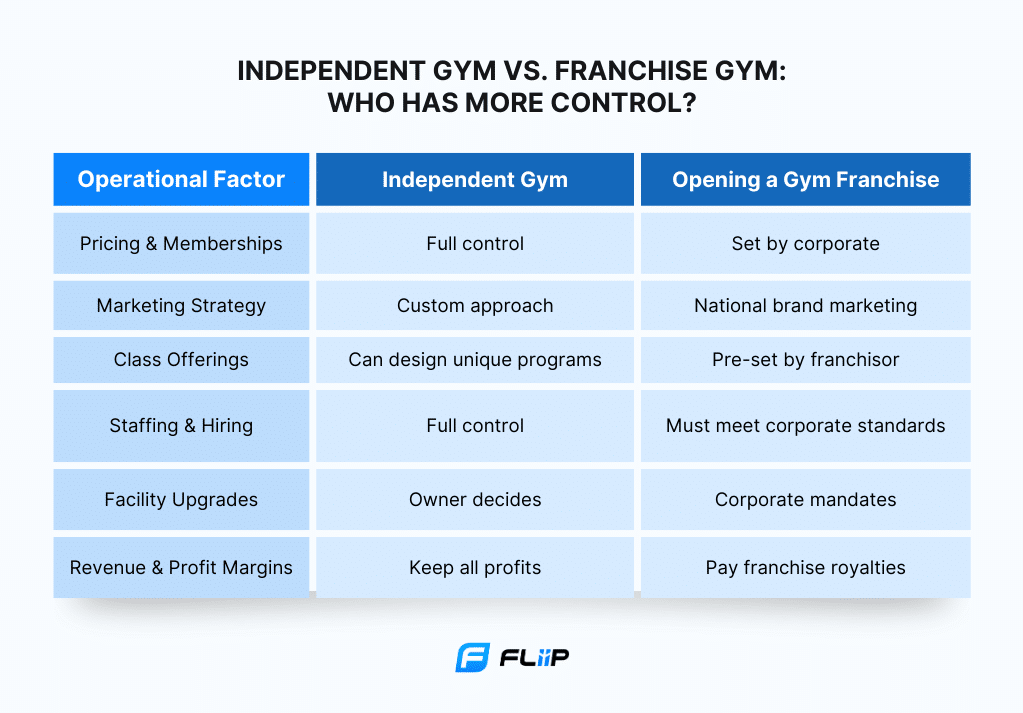
Running a gym isn’t just about signing up members, it’s about keeping the business running smoothly every day. That includes handling staffing, pricing, class schedules, equipment maintenance, and member retention. The level of control you have over these decisions depends entirely on whether you’re opening a gym franchise or starting an independent gym.
Managing an Independent Gym: Full Control, Full Responsibility
When you own an independent gym, you make all the decisions, from pricing and marketing to staffing and facility upgrades. That kind of control is a huge advantage, but it also means you’re responsible for everything.
Pricing and Membership Tiers
- You decide how much to charge, whether to offer discounts, and how to structure memberships.
- Competitor pricing research is essential, charge too much, and you’ll struggle; charge too little, and you’ll hurt profitability.
Staffing and Payroll
- You hire your own trainers, front desk staff, and cleaning crew.
- Payroll costs vary widely depending on location and staff size.
Class Schedules and Services
- Total flexibility to offer unique classes, personal training, or specialized fitness programs.
- No corporate requirements on class structure, allowing you to tailor services to your local market.
Facility Upgrades and Equipment Decisions
- You decide when to invest in new equipment or renovations.
- Equipment selection is entirely up to you, no corporate mandates.
Retention and Member Engagement Strategies
- You control how you engage members, loyalty programs, referral incentives, and personal outreach.
- High churn rates can be a challenge without brand recognition to keep members committed.
Managing a Gym Franchise: Structure, Support, and Restrictions
Opening a gym franchise means following a corporate playbook. The franchise provides you with a proven system, but you must follow their rules and policies.
Pricing and Membership Tiers
- You can’t set your own prices, corporate determines membership costs.
- Discounts and promotions must align with brand-wide policies.
Staffing and Payroll
- You’re responsible for hiring, but corporate may set guidelines for trainer certifications, uniform requirements, and service standards.
- Payroll costs depend on franchise location and size.
Class Offerings and Gym Services
- Some franchises have pre-set class structures (e.g., Orangetheory, F45).
- You can’t add new services without corporate approval.
Facility Upgrades and Equipment
- The franchisor decides what equipment you must buy and when to replace it.
- All gym locations must look uniform, so customization is limited.
Retention and Member Engagement Strategies
- Corporate handles larger-scale retention programs, but you can engage members locally.
- Less flexibility in trying new promotions or customer engagement strategies.
Which Model Works Best for You?
- If you want full control over operations and don’t mind the extra workload, an independent gym is the better fit.
- If you prefer structure, corporate support, and a pre-made system, opening a gym franchise offers a simpler path to business ownership.
Revenue Potential and Profitability: Which Gym Model Makes More Money?
At the end of the day, your gym isn’t just about helping people get fit, it’s a business. Whether you’re opening a gym franchise or running an independent gym, profitability depends on how well you manage expenses, attract members, and retain them long-term.
Both models have income potential, but the way revenue is generated and distributed is different. Let’s break down how each model makes money and which one offers the best financial return.
How Independent Gyms Make Money
Independent gym owners keep 100% of their revenue but also take on 100% of the risk. Since there’s no corporate backing, success depends on local marketing, strong pricing strategies, and member retention.
Revenue Streams for Independent Gyms
- Membership Fees – Monthly dues, day passes, and annual memberships.
- Personal Training & Coaching – One-on-one and group training packages.
- Group Classes – HIIT, yoga, boot camps, and specialty fitness programs.
- Retail Sales – Supplements, branded gym apparel, fitness accessories.
- Corporate Wellness Partnerships – Contracts with businesses for employee fitness programs.
Since there are no franchise fees or royalty payments, independent gyms can scale revenue faster, but only if they have a strong retention strategy.
Biggest Profitability Challenge
- Without a recognized brand, it takes longer to build trust and attract members.
- Marketing costs are higher since everything is self-funded.
- Pricing strategy must be competitive but profitable, undercutting big-box gyms is risky.
Potential Profit Margins
- Net profit margin for independent gyms: 10% to 30%, depending on location and operating costs.
- Profitability takes longer to achieve since brand awareness starts from zero.
How Franchise Gyms Make Money
Opening a gym franchise comes with built-in brand recognition, which can lead to faster revenue generation, but there are ongoing costs that eat into profit margins.
Revenue Streams for Gym Franchises
- Membership Fees – Corporate sets pricing, but members trust the brand.
- Upselling Corporate – Approved Services – Certain franchises allow limited add-ons like personal training.
- Corporate Partnerships – Some franchises negotiate deals with large companies for member discounts.
- Retail Sales – Many franchises require owners to sell specific products (branded supplements, apparel).
While a franchise gym can scale faster, franchisees don’t keep 100% of their revenue. Franchise agreements require:
- Royalty payments (4% to 8% of monthly revenue).
- Marketing fees (1% to 3% of revenue, used for corporate campaigns).
- Strict pricing rules, franchisees can’t adjust fees based on local market demand.
Biggest Profitability Challenge
- Franchise fees cut into revenue, making it harder to maximize margins.
- Corporate sets pricing and service limitations, reducing flexibility.
- Some locations struggle if the brand reputation declines, you’re tied to corporate decisions.
Potential Profit Margins
- Net profit margin for franchise gyms: 8% to 20% after royalties and fees.
- Revenue can grow quickly due to brand trust, but profitability depends on how well the gym is managed.
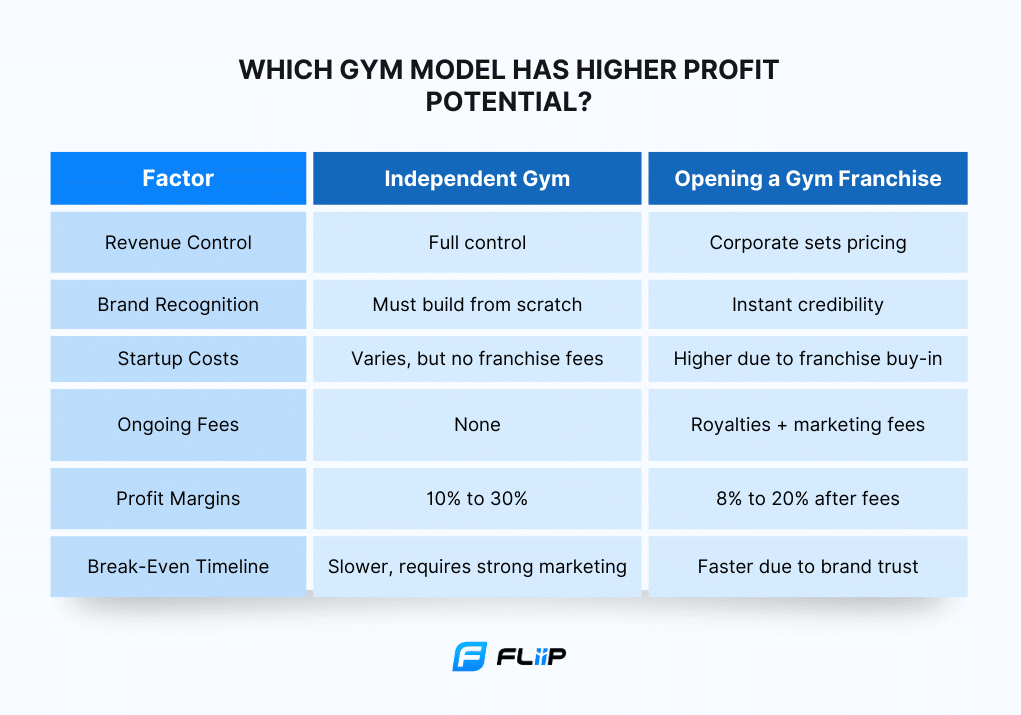
Which Model Makes More Sense Financially?
If you want higher profit potential and full revenue control, an independent gym can be more lucrative, but it takes time, effort, and strong business skills to scale.
If you want faster revenue growth with a structured system, opening a gym franchise provides a more predictable business model but comes with ongoing costs and limited flexibility.
Risk and Long-Term Growth: Which Model Scales Better?
Both opening a gym franchise and running an independent gym come with long-term growth opportunities, but they scale differently. Some entrepreneurs want to own multiple locations, while others prefer to expand services within a single facility. Understanding how each model grows over time will help you decide which aligns with your vision.
Scaling an Independent Gym: Unlimited Possibilities, Higher Risk
Independent gym owners have no restrictions on growth. Once their first gym becomes profitable, they can expand in different ways:
- Opening additional locations under the same brand or different fitness concepts.
- Launching new services like personal training programs, online coaching, or wellness add-ons.
- Expanding facility size to accommodate more members and new offerings.
Since there are no corporate rules, independent gyms can pivot based on market demand. Owners can:
- Adjust pricing without approval.
- Introduce unique services (e.g., cryotherapy, meal prep partnerships, recovery-focused fitness).
- Develop their own branding without franchise restrictions.
Independent gyms have higher earning potential long-term but require smart expansion strategies. Owners who reinvest profits wisely can scale their brand, open new locations, or even franchise their own gym concept.
Scaling a Gym Franchise: Faster Growth, More Restrictions
Franchise gyms are built for rapid expansion, but franchisees don’t have the same level of control as independent owners. Growth is structured and follows corporate policies.
Opening Multiple Franchise Locations
- Franchisees who perform well can buy additional locations.
- Corporate approves locations and ensures brand consistency.
Leveraging Corporate Resources
- National marketing campaigns make it easier to attract members in new locations.
- Franchisors often help secure financing for expansion.
Expanding Within the Franchise Network
- Some franchises allow owners to invest in different fitness brands under the same company umbrella.
Challenges of Scaling a Gym Franchise
- Corporate approval is required for every new location.
- Higher costs due to franchise fees, owners must continue paying royalties.
- Limited flexibility, services, branding, and pricing must follow corporate standards.
Franchises scale faster because they rely on a trusted name, making new locations easier to open. However, profitability is capped by royalties and corporate restrictions.
Which Model Is Better for Long-Term Success?
- If you want full control over your business, pricing, and services, an independent gym offers higher revenue potential but takes longer to scale.
- If you want a faster way to open multiple locations, opening a gym franchise offers corporate-backed expansion opportunities but with less flexibility and lower profit margins.
Both models can be highly successful, but choosing the right one depends on whether you prioritize independence or structured growth.
The next section will cover how gym management software helps both independent and franchise gyms streamline operations and scale efficiently.
How Gym Management Software Supports Both Business Models
Whether you’re opening a gym franchise or launching an independent gym, managing daily operations efficiently is critical. From handling memberships and payments to scheduling classes and tracking financials, the right gym management software can make or break your success.
While both models have different operational structures, technology plays a major role in simplifying management, improving member retention, and increasing profitability.
How Gym Management Software Helps Independent Gym Owners
Independent gym owners don’t have corporate support, so they need technology to streamline operations and maximize efficiency. The right software can:
Automate Membership and Billing
- Eliminates manual payment tracking with automated billing and renewals.
- Sends reminders for expiring memberships to reduce churn.
Simplify Class Scheduling and Trainer Management
- Allows members to book classes and training sessions online.
- Helps gym owners track staff availability and payroll.
Enhance Member Engagement and Retention
- Sends personalized emails and SMS reminders to keep members active.
- Tracks attendance trends to identify at-risk members before they cancel.
Provide Business Insights and Reporting
- Analyzes revenue, expenses, and membership trends to help owners make data-driven decisions.
- Identifies the most profitable services and programs for better financial planning.
Without corporate backing, independent gym owners must rely on efficient software to handle operations and reduce administrative workload.
How Gym Management Software Helps Franchise Gym Owners
Opening a gym franchise means following corporate guidelines, but franchisees still need tools to manage their location efficiently. Franchise gyms benefit from software that:
Integrates with Corporate Systems
- Syncs membership and financial data with the franchisor’s system.
- Ensures pricing, branding, and operational standards are met.
Manages Multi-Location Operations
- Franchisees who own multiple gyms can monitor performance across locations from one dashboard.
- Standardizes billing, membership tiers, and promotions.
Optimizes Staff Scheduling and Payroll
- Automates trainer availability and scheduling to maximize efficiency.
- Helps manage payroll and commissions for personal trainers.
Supports Corporate Marketing and Local Outreach
- Provides tools for local marketing campaigns while aligning with corporate branding.
- Tracks lead conversion and member retention to measure success.
For franchise owners, corporate handles big-picture strategy, but local gym operations still require efficient systems to manage day-to-day business.
Why the Right Gym Management Software Matters
- Independent gym owners need software to handle everything, from payments to marketing to retention.
- Franchise gym owners need software that integrates with corporate systems while allowing local control over operations.
No matter which model you choose, the right gym management software will save time, reduce manual work, and help your business grow faster.
Final Thoughts: Which Path is Right for You?
Deciding between starting your own independent gym and opening a gym franchise ultimately comes down to your business goals, appetite for risk, and the level of control you want over your operations. If you thrive on creative freedom and are ready to build a brand from scratch, an independent gym offers full control, but it also means taking on all the risks, responsibilities, and a steep learning curve when it comes to marketing and management.
On the other hand, opening a gym franchise provides the comfort of an established brand, a proven business model, and ongoing corporate support that can shorten the learning curve and help you attract members more quickly. However, you’ll have less control over key aspects of your business and will need to work within the constraints of franchise guidelines, fees, and royalties.
Ultimately, success in the fitness industry depends on how well you understand your market, manage your team, and use technology to streamline operations. Whether you choose to forge your own path or align with a corporate brand, make sure the business model you choose aligns with your vision, financial situation, and long-term goals.