Everything You Need to Know About Gym Franchises in 2025
Owning a gym sounds great, helping people get fit, running a business you’re passionate about, and tapping into the ever-growing fitness industry. But starting a gym from scratch? That’s a whole different challenge. Between branding, marketing, operations, and figuring out what actually works, it’s no surprise that many entrepreneurs turn to gym franchises instead.
A gym franchise gives you a proven business model, built-in brand recognition, and corporate support to get up and running faster. Instead of guessing what equipment to buy, how to structure membership plans, or how to market your gym, the franchise provides a roadmap. But that doesn’t mean it’s a guaranteed success, owning a gym franchise comes with real costs, responsibilities, and limitations.
The fitness industry in 2025 is more competitive than ever, with boutique studios, budget-friendly 24/7 gyms, and premium wellness centers all fighting for members. If you’re considering buying a gym franchise, you need to know:
- How much it actually costs (beyond the franchise fee).
- Which franchises are profitable and which ones aren’t worth the hype.
- The biggest mistakes new franchise owners make (and how to avoid them).
- What it really takes to run a successful gym franchise in today’s fitness landscape.
This guide covers everything you need to know before investing in a gym franchise, so you can make the right decision for your goals, budget, and business vision. Let’s get into it.
How Gym Franchises Work
A gym franchise is a business model where you buy the rights to operate a gym under an established brand. Instead of building a gym from scratch, you get access to the franchise’s name, business model, operational support, and marketing systems.
For many entrepreneurs, this removes a lot of the guesswork and risk. But a gym franchise isn’t a turnkey solution, you’re still responsible for running the day-to-day operations, managing staff, and ensuring your gym is profitable.
What You Get When You Buy a Gym Franchise
When you invest in a gym franchise, you’re not just paying for a name. You’re buying into a structured system designed to help you succeed. Here’s what most gym franchises include:
- Brand recognition – You don’t have to build trust from scratch. Members already know the brand and what to expect.
- Proven business model – The franchise provides a blueprint for pricing, marketing, and operations based on what’s worked in other locations.
- Corporate training & support – Most franchises offer initial training to help you launch and ongoing support for marketing, technology, and operations.
- Standardized equipment & design – Franchises provide a list of approved equipment and a set layout for your gym.
- Marketing assistance – Some franchises handle national marketing campaigns, while others provide tools and strategies for local promotions.
- Membership management software – Most franchises require you to use their CRM and billing system to ensure a uniform customer experience.
- Preferred vendor deals – Discounts on gym equipment, supplements, and apparel through the franchise’s partnerships.
What Gym Franchises Expect from You
While a gym franchise offers guidance, it’s not a passive investment. Here’s what you’ll be responsible for:
- Paying franchise fees – This includes an initial buy-in cost and ongoing royalty fees.
- Securing a location – You’ll need to find and lease a suitable space that meets the franchise’s criteria.
- Hiring and managing staff – Even with corporate support, staffing and daily operations fall on you.
- Following brand guidelines – You won’t have the freedom to create your own pricing model, branding, or gym policies.
- Running local marketing campaigns – While corporate may handle some advertising, local outreach is still your responsibility.
A gym franchise offers a faster route to business ownership with a lower risk of failure compared to independent gyms, but it also comes with upfront costs and restrictions.
The Pros and Cons of Owning a Gym Franchise
Owning a gym franchise can be a great opportunity, but it’s not for everyone. While it provides a structured path to business ownership, it also comes with franchise fees, operational restrictions, and ongoing costs that you wouldn’t have with an independent gym.
Before making the leap, it’s important to understand both the benefits and the challenges of running a gym franchise.
The Cons of Owning a Gym Franchise
🚩 Upfront Franchise Fees & Ongoing Royalties
Buying into a gym franchise isn’t cheap. You’ll need to pay:
- A franchise fee (typically between $50,000 and $250,000 depending on the brand).
- Ongoing royalty fees (usually 4-8% of revenue).
- Marketing fees for corporate-run advertising campaigns.
These costs can cut into your profits and limit flexibility in how you run your business.
🚩 Less Control Over Branding & Operations
When you own an independent gym, you can set your own prices, offer custom promotions, and brand the gym however you want. With a gym franchise, you have to follow corporate guidelines on:
- Membership pricing.
- Gym layout and equipment selection.
- Marketing materials and promotions.
- Approved vendors and suppliers.
If you’re someone who likes to experiment with business strategies, a franchise might feel restrictive.
🚩 Competitive Territory Restrictions
Most gym franchises protect their franchisees by assigning exclusive territories, but that also means you may not be able to open where you want. If there’s already a franchise location in your preferred city, you may have to look elsewhere or wait for an opening.
🚩 Locked Into a Long-Term Agreement
A franchise agreement typically lasts 5 to 10 years. If you change your mind, getting out of a franchise isn’t easy, you may have to sell your location, pay an exit fee, or follow strict termination clauses.
🚩 Not All Franchises Are Profitable
Just because a brand is popular doesn’t mean it’s profitable. Some gym franchises have high fees, weak corporate support, or too many locations competing in the same market. That’s why researching franchise profitability is crucial before signing any agreements.
Is a Gym Franchise Right for You?
A gym franchise can be a faster, safer way to enter the fitness industry compared to starting a gym from scratch, but it’s not for everyone.
✅ A gym franchise might be a great fit if:
- You want a proven business model with support from corporate.
- You prefer structure and don’t mind following brand guidelines.
- You don’t want to build a brand from scratch and would rather use a known name.
- You have the capital to cover franchise fees and startup costs.
❌ It might NOT be the best choice if:
- You want full creative control over branding, pricing, and marketing.
- You don’t want to pay ongoing royalties to a corporate office.
- You prefer more flexibility in how you run your business.
If a gym franchise sounds like a good fit, the next step is understanding the costs involved. In the next section, we’ll break down how much it costs to buy and operate a gym franchise in 2025.

The Cost of Buying a Gym Franchise in 2025
Opening a gym franchise comes with a price tag, and it’s not just the upfront fee. Many new franchise owners underestimate the total cost of launching and running the business, which can lead to financial strain down the line. Knowing exactly what you’re paying for helps you plan better and avoid surprises.
Breakdown of Gym Franchise Costs
Franchise Fees
This is the price you pay upfront to buy into the gym franchise brand. It grants you the right to use the franchise’s name, business model, and corporate resources. Fees vary depending on the brand, but typically range between $50,000 and $250,000.
Buildout & Construction Costs
Once you’ve secured a location, you’ll need to renovate and equip the space according to franchise guidelines. Costs include:
- Gym flooring, mirrors, and locker rooms
- Approved equipment (weights, machines, turf, recovery stations)
- Lighting, signage, and branding
- HVAC and ventilation upgrades
- Permits and inspections
On average, buildout costs range from $200,000 to $1 million, depending on the size and location of the gym.
Equipment Costs
Most franchises require specific machines, weights, and technology, which can’t be sourced from just anywhere. Expect to spend $50,000 to $500,000 on:
- Cardio machines (treadmills, rowers, bikes)
- Strength training machines
- Free weights and racks
- Specialty equipment (sleds, battle ropes, resistance bands)
- Member tracking & check-in systems
Marketing & Grand Opening Costs
Even with corporate marketing support, local advertising is still your responsibility. Expect to invest $10,000 to $50,000 in:
- Local digital ads (Google, Facebook, Instagram)
- Direct mail promotions
- Grand opening events and giveaways
- PR campaigns to attract media coverage
Staff Hiring & Payroll
Hiring qualified trainers, front desk staff, and sales reps is a major cost. Depending on the size of your gym and membership model, you may need:
- Certified personal trainers
- Group class instructors
- Sales & membership consultants
- Operations staff for cleaning and maintenance
Payroll costs vary, but for a mid-sized gym franchise, expect to budget $100,000 to $400,000 annually.
Ongoing Royalty & Marketing Fees
Most gym franchises charge monthly royalty fees as a percentage of revenue (typically 4% to 8%). Some also require national marketing contributions (around 1% to 3% of revenue).
For a gym generating $500,000 in annual revenue, that could mean $25,000 to $50,000 per year in franchise fees alone.
Miscellaneous Costs
Other expenses include:
- Business insurance (liability, workers’ compensation, property insurance)
- Software fees (gym management & access control software)
- Utilities & rent (varies by location)
Total Estimated Cost to Open a Gym Franchise
- Budget gym franchises: $300,000 – $500,000
- Mid-range fitness studios: $500,000 – $1 million
- High-end or large-scale gyms: $1 million – $3 million+
For many franchisees, the biggest challenge isn’t just affording the startup costs, it’s securing the right financing. The next section breaks down the best ways to fund a gym franchise and what options are available for new owners.
These estimates are based on industry averages and can vary depending on factors such as location, gym size, and specific franchise requirements. It's essential to conduct thorough research and consult with the franchisor to obtain accurate cost projections tailored to your situation.
Financing a Gym Franchise: What Are Your Options?
Not everyone has hundreds of thousands of dollars readily available to open a gym franchise. Even if you do, financing can help preserve cash flow and provide financial flexibility as you grow. Understanding your financing options ensures you can secure the necessary funding without overextending yourself or taking on unnecessary risk.
Traditional Business Loans
- Best for: Gym owners with strong credit and a solid business plan
- Loan amount: Typically between $100,000 and $1 million
- Where to get it: Banks, credit unions, and online lenders
Traditional business loans are one of the most common ways to finance a gym franchise. Lenders typically require:
- A detailed business plan outlining projected revenue and expenses
- A strong credit score (usually 680 or higher for better rates)
- A down payment (typically 10 to 20 percent of the total loan amount)
Interest rates for business loans generally range from 5 to 12 percent, depending on creditworthiness and financial history.
SBA Loans (Small Business Administration Loans)
- Best for: Franchisees looking for lower-interest, government-backed loans
- Loan amount: Up to $5 million, though most gym owners need between $250,000 and $1 million
- Where to get it: SBA-approved banks and lenders
SBA loans offer lower interest rates and longer repayment terms than traditional loans. The most common options for gym franchise owners include:
- SBA 7(a) Loan – Best for startup costs, equipment purchases, and working capital
- SBA 504 Loan – Designed for purchasing commercial real estate, making it a good option for gym owners who want to own their building rather than lease
SBA loans typically require a strong credit score, collateral, and a personal guarantee, meaning you will be personally liable for repayment if the business fails.
Franchise-Specific Financing
- Best for: Gym franchise owners who prefer working with lenders experienced in franchise funding
- Loan amount: Varies depending on the franchise and lender
- Where to get it: Franchise-approved lenders, alternative financing companies
Many gym franchises partner with preferred lenders that specialize in funding new franchisees. These lenders already understand the business model, making the loan approval process faster and more straightforward. Some franchisors even offer in-house financing, allowing new owners to spread out payments on the initial franchise fee, equipment, or buildout costs.
Equipment Leasing & Financing
- Best for: Gym owners looking to reduce upfront costs for equipment purchases
- Loan amount: Covers the cost of equipment only
- Where to get it: Equipment financing companies, some gym franchises
Gym equipment is one of the biggest expenses in opening a gym franchise, often costing anywhere from $50,000 to $500,000. Instead of paying upfront, many owners choose to lease or finance equipment. This allows you to:
- Make fixed monthly payments instead of a large initial investment
- Upgrade or replace equipment more easily when needed
- Deduct lease payments as a business expense for tax benefits
Investors & Partnerships
- Best for: Gym owners who prefer shared financial responsibility
- Loan amount: Varies based on the investment agreement
- Where to get it: Private investors, business partners, venture capital firms
Some entrepreneurs bring on investors or business partners to help fund their gym franchise. In exchange for funding, investors may receive:
- A percentage of profits
- Equity ownership in the business
- Decision-making rights in operations
This option can reduce the financial burden, but it also means giving up full control over the business. Make sure any partnership agreement is clearly defined to avoid conflicts down the road.
Learn More: The Best 10 Commercial Gyms in the US
Alternative Financing Options
- Best for: Gym owners who don’t qualify for traditional loans
- Loan amount: Varies depending on the financing model
- Where to get it: Online lenders, crowdfunding platforms, revenue-based financing companies
For those who don’t qualify for traditional loans, alternative financing options may include:
- Crowdfunding – Raising money from the community through platforms like Kickstarter or GoFundMe
- Revenue-based financing – A lender provides capital in exchange for a percentage of future revenue until the loan is repaid
- Merchant cash advances – A lump sum of cash provided in exchange for a portion of daily credit card sales (usually at a high cost)
Choosing the Right Financing Option
The best financing option depends on your credit history, available capital, risk tolerance, and long-term goals. Traditional loans and SBA loans tend to offer the best rates, but they require strong financials. Equipment leasing and franchise-specific financing can reduce upfront costs, while partnerships and alternative funding options offer more flexibility.
Understanding the real costs of a gym franchise and securing the right financing is key to building a successful business. The next step is avoiding the common mistakes that new gym franchise owners make so you can start strong and stay profitable.

The Biggest Mistakes New Gym Franchise Owners Make
Owning a gym franchise comes with clear advantages, brand recognition, a proven business model, and corporate support. But that doesn’t mean it’s foolproof. Many new franchise owners underestimate costs, mismanage operations, or ignore franchise guidelines, leading to unnecessary struggles and, in some cases, failure.
Avoiding these common mistakes can set your gym franchise up for long-term success.
1. Underestimating Total Startup and Operational Costs
Many new franchise owners focus only on the franchise fee without fully accounting for:
- Buildout and equipment costs
- Lease agreements and real estate expenses
- Payroll and hiring costs
- Marketing and local advertising requirements
It’s easy to assume that once you pay the initial fee, the rest will fall into place, but unexpected expenses can pile up quickly. Before signing a franchise agreement, get a full breakdown of costs and budget at least 20% more than your initial estimate to cover unexpected challenges.
2. Choosing a Franchise Based on Hype Instead of Profitability
Some fitness brands look exciting on paper but may not be the best investment. Instead of choosing a gym franchise based on name recognition alone, evaluate:
- Franchisee success rates, Are existing owners profitable?
- Corporate support, Does the franchise provide ongoing training, marketing, and business assistance?
- Member retention and market demand, Is there consistent demand for this type of gym in your area?
A trendy brand might not have the long-term sustainability that a well-established fitness franchise does.
3. Not Negotiating Lease Terms Properly
One of the biggest expenses in running a gym franchise is the lease. A bad lease agreement can destroy profitability before you even open.
- Look for favorable lease terms with options for renewal and exit strategies.
- Negotiate buildout contributions from landlords, some will help cover costs.
- Avoid committing to too much space, bigger isn’t always better if you can’t justify the rent.
Many new franchise owners jump into a lease too quickly, assuming location matters more than affordability. But a great location doesn’t help if rent eats up most of your revenue.
4. Overestimating Demand in a Specific Market
Just because a gym franchise is successful in one city doesn’t mean it will work in another. Before opening, research:
- Local competition, Are there too many similar gyms in the area?
- Target demographics, Does your market fit the gym’s ideal member profile?
- Economic factors, Can the community afford the membership fees?
Market research is essential to avoid opening in a location that looks good on paper but lacks long-term demand.
5. Not Following Franchise Guidelines
Many new franchise owners try to make changes, whether to branding, pricing, or gym operations, without corporate approval. This can lead to:
- Brand consistency issues that hurt the overall franchise network.
- Legal problems if you violate franchise agreements.
- Lack of support from corporate, since many benefits depend on following set standards.
Buying a gym franchise means you’re investing in an established system. The most successful franchisees follow the playbook while still finding ways to stand out within corporate guidelines.
6. Hiring the Wrong Team
A gym franchise isn’t just about the brand, it’s about the people who run it. Hiring unqualified or disengaged staff leads to:
- Poor customer service and low member retention.
- Bad first impressions that hurt local reputation.
- Increased turnover, which creates higher staffing costs.
Invest in proper hiring, training, and staff development from the start to build a strong team that represents the franchise well.
7. Focusing Only on Membership Sales Instead of Retention
Many new franchise owners assume selling memberships is the key to success. But high churn rates (members canceling after a few months) can ruin profitability.
- Offer member engagement programs to keep people coming back.
- Invest in trainer development, a great coaching staff increases retention.
- Create a community atmosphere to make members feel connected.
A successful gym franchise isn’t just about attracting new members, it’s about keeping them long-term.
8. Expecting Passive Income Without Hands-On Management
Some people invest in a gym franchise thinking it will run itself. While some models allow for semi-absentee ownership, most require hands-on management in the first few years.
- Be involved in operations to ensure quality control.
- Regularly analyze performance metrics to spot issues early.
- Build relationships with staff and members to create a strong gym culture.
Running a gym franchise takes work, but those who stay engaged see far greater success than those who assume the business will operate on autopilot.
How to Avoid These Mistakes
Owning a gym franchise can be a profitable and rewarding business, but it requires careful planning and execution. Avoiding these mistakes starts with:
- Doing thorough financial planning before signing an agreement.
- Researching multiple franchises before choosing one.
- Understanding your market and selecting the right location.
- Following corporate guidelines while bringing your own leadership skills.
- Prioritizing retention to keep members engaged and loyal.
A strong start leads to a successful, long-term gym franchise.
Running a Successful Gym Franchise in 2025
Owning a gym franchise is one thing, running it successfully is another. While franchises provide brand recognition and a proven business model, they don’t guarantee success. The gym owners who thrive are the ones who put in the effort to manage operations, engage their community, and optimize their business for long-term profitability.
If you want to build a gym franchise that lasts, here’s what you need to focus on.
Hiring the Right Team and Building a Strong Gym Culture
A gym is only as good as the people who run it. While corporate branding and marketing help attract members, your staff is what keeps them coming back.
- Hire passionate trainers who genuinely care about helping members reach their fitness goals.
- Train front desk staff to be friendly, knowledgeable, and proactive in member engagement.
- Create an internal culture where staff feels valued and motivated, happy employees lead to happy members.
Members will remember how they feel at your gym more than your equipment or branding. A strong, engaged team makes a huge difference in retention.
Mastering Local Marketing (Even if Corporate Helps with Advertising)
While franchise brands often run national or regional marketing campaigns, local marketing is your responsibility.
- Build a strong social media presence showcasing your gym’s community, trainers, and success stories.
- Run targeted local ads on Google, Facebook, and Instagram to attract members in your area.
- Offer referral incentives for current members who bring in friends or family.
- Partner with local businesses, schools, and sports teams to create promotions that tap into existing communities.
Corporate may give you marketing templates, but it’s up to you to create a personalized local strategy that works for your gym’s neighborhood.
Keeping Retention High and Reducing Churn
Many gym franchise owners focus too much on signing new members and not enough on keeping the ones they have.
- Offer member engagement programs like challenges, workshops, and community events.
- Invest in top-tier coaching, members are more likely to stay if they feel connected to their trainers.
- Track attendance patterns and follow up with members who stop showing up to prevent cancellations.
- Make sure your gym’s cleanliness, equipment maintenance, and overall atmosphere keep people excited to return.
The more members feel valued and engaged, the longer they’ll stay.
Managing Finances and Maximizing Profitability
Even with a solid gym franchise brand behind you, financial management is your responsibility.
- Monitor monthly expenses vs. revenue to keep your cash flow healthy.
- Upsell personal training, group classes, or premium memberships to boost revenue.
- Avoid unnecessary spending, just because corporate suggests something doesn’t mean you have to invest in it right away.
- Regularly review staffing costs, lease agreements, and marketing budgets to identify areas where you can cut costs without sacrificing quality.
Many franchise owners struggle not because they don’t make money, but because they mismanage it. Staying on top of your financials is critical.
Staying Ahead of Industry Trends
The fitness industry is evolving fast. Gym franchises that adapt to trends and technology stay relevant, while those that resist change fall behind.
- Offer hybrid membership options (in-person + digital fitness classes).
- Invest in wearable tech integration for member tracking.
- Consider adding AI-driven fitness coaching or smart gym equipment.
- Keep up with emerging fitness trends like recovery-based training, wellness services, and performance tracking.
The most successful gym franchise owners stay proactive instead of waiting for corporate to implement changes.
What Separates the Top Gym Franchise Owners from the Rest?
Owning a gym franchise doesn’t mean you can just sit back and watch money roll in. The best franchise owners:
- Hire and retain a strong team that members trust.
- Take control of local marketing instead of relying only on corporate promotions.
- Focus on member retention just as much as new sign-ups.
- Run the business efficiently, tracking finances and maximizing revenue streams.
- Stay ahead of trends to keep their gym competitive.
A successful gym franchise isn’t just about following the corporate playbook, it’s about understanding your market, leading your team, and keeping members engaged.
The Future of Gym Franchises: Trends to Watch in 2025 and Beyond
The gym franchise industry is evolving fast, and staying ahead of trends is critical for long-term success. Member expectations, fitness technology, and business models are shifting, creating new opportunities, and challenges, for franchise owners. Whether you already own a gym franchise or are considering investing in one, understanding where the industry is headed will help you make smarter business decisions.
The Rise of Budget-Friendly & 24/7 Gym Franchises
Gym-goers are looking for convenience and affordability, which is why low-cost, no-frills fitness franchises continue to dominate.
- Budget-friendly gym franchises (like Planet Fitness and Crunch) are attracting members who want basic equipment without expensive add-ons.
- 24/7 access gyms (such as Anytime Fitness and Snap Fitness) are appealing to people with unpredictable schedules.
- Self-service models with minimal staffing allow franchise owners to cut costs and maximize profit margins.
Franchises that prioritize affordability and accessibility are expected to keep growing as more people opt for simple, cost-effective gym memberships.
The Boom of Boutique Fitness Franchises
While budget gyms are thriving, the boutique fitness sector is also exploding. Instead of large general-purpose gyms, members are gravitating toward specialized, community-driven experiences like:
- High-intensity interval training (HIIT) studios (F45, OrangeTheory)
- Strength-focused gyms (Alphalete, Iron Tribe)
- Boxing and martial arts gyms (9Round, Mayweather Boxing + Fitness)
- Yoga, pilates, and recovery studios (YogaSix, Club Pilates)
People are willing to pay more for a focused, results-driven workout experience. Boutique fitness franchises with strong brand loyalty and high retention rates will continue to gain traction.
Hybrid Gym Models: Combining In-Person and Digital Fitness
The demand for hybrid fitness, blending in-person workouts with on-demand digital content, is growing.
- Many franchises now offer live-streamed or recorded workouts through their branded apps.
- Members want the flexibility to work out at home or in the gym.
- Gym franchises that integrate wearables and performance tracking are attracting tech-savvy members.
Any gym franchise that ignores digital fitness risks losing members to competitors who provide both in-person and virtual options.
Smart Gym Technology & AI Integration
Advancements in AI, automation, and smart gym equipment are making franchises more efficient and data-driven.
- AI-powered personal trainers and customized workout recommendations will become more common.
- Smart access control will eliminate the need for front desk staff in many 24/7 gyms.
- Wearable integration with gym management software will help members track performance and recovery.
Technology is no longer just an add-on, it’s a core part of the gym experience. Gym franchises that adopt smart tech solutions will have a competitive edge.
Recovery & Wellness Services Are Becoming Essential
Fitness is no longer just about working out, it’s about overall health and recovery. More gym franchises are incorporating recovery services like:
- Cryotherapy, red light therapy, and infrared saunas
- Assisted stretching and mobility programs
- Compression therapy and massage guns
The franchises that invest in recovery and wellness add-ons will tap into a new revenue stream while improving member retention.
Corporate Wellness Programs Are Fueling Growth
More companies are investing in employee wellness, and gym franchises are benefiting.
- Corporate partnerships with fitness brands are increasing as businesses offer discounted memberships to employees.
- Some gym franchises are setting up corporate fitness programs and on-site wellness initiatives.
- This trend is especially strong in the boutique and high-end fitness market, where employers see fitness as a way to boost productivity and morale.
Gym franchises that position themselves as corporate wellness partners can open up new revenue opportunities.
Sustainability & Eco-Friendly Gym Design
As sustainability becomes a bigger focus for consumers, some gym franchises are shifting toward eco-conscious practices, including:
- Energy-efficient equipment and lighting
- Green building materials and water-saving showers
- Sustainable merchandise and partnerships with ethical brands
While not every gym franchise is going green, those that embrace sustainability as part of their brand are likely to stand out in the fitness market.
Increased Focus on Community & Member Engagement
The most successful gym franchises aren’t just places to work out, they’re community-driven businesses that keep members engaged.
- Franchises are launching member events, competitions, and social fitness challenges.
- More focus is being placed on personalized coaching and relationship-building to keep members motivated.
- Gym owners who actively build a strong, local gym culture see higher retention rates and word-of-mouth referrals.
In 2025, franchises that prioritize community over transactions will see stronger member loyalty and long-term growth.
What This Means for Gym Franchise Owners
The gym franchise industry is evolving, and the most successful owners will be the ones who adapt to these changes.
- Budget and boutique gyms are dominating the market, know where your franchise fits in.
- Hybrid fitness models are no longer optional, members expect flexibility.
- Smart gym technology is becoming standard, invest in automation and digital tools.
- Recovery services are adding new revenue streams, wellness is part of fitness now.
- Community engagement is key, gyms that build real connections with members will thrive.
Is a Gym Franchise the Right Investment for You?
While franchises offer brand recognition, corporate support, and a proven model, they also come with fees, restrictions, and operational responsibilities that some entrepreneurs may find limiting.
Before committing, it’s important to assess whether a gym franchise aligns with your goals, finances, and business style.
Who Thrives in the Gym Franchise Model?
A gym franchise is a great fit for those who:
- Want a structured business model rather than building a gym from scratch.
- Prefer to follow established guidelines rather than experimenting with pricing, branding, or operations.
- Have strong management skills to lead staff and create a great member experience.
- Are comfortable with ongoing franchise fees in exchange for corporate support.
- See fitness as a long-term investment, understanding that profitability takes time.
Franchisees who succeed tend to embrace the corporate model while adding their own leadership skills to make their location stand out.
Who Might Struggle with a Gym Franchise?
A gym franchise might not be the best fit for:
- Entrepreneurs who want full creative control over branding, pricing, and gym design.
- People who struggle with authority, franchises have strict rules, and not following them can result in penalties or termination.
- Owners looking for quick, passive income, a gym franchise requires hands-on management, especially in the first few years.
- Anyone unwilling to make a long-term financial commitment, most franchise agreements last five to ten years, and exiting early can be expensive.
For those who prefer more flexibility and independence, opening an independent gym might be a better alternative.
Gym Franchise vs. Independent Gym: Which One is Better?
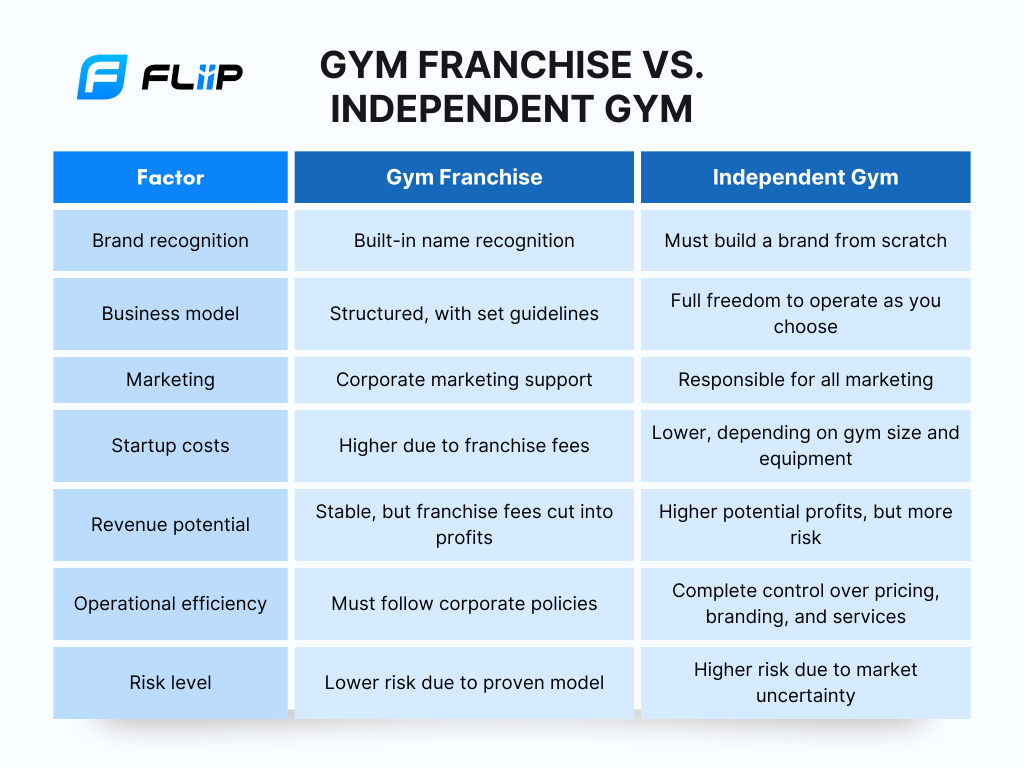
Neither option is inherently better, but choosing the right one depends on your personality, risk tolerance, and long-term vision.
Should You Invest in a Gym Franchise?
A gym franchise can be a profitable and rewarding business, but only if you go in with a clear understanding of the investment, responsibilities, and potential challenges.
Before making a decision:
- Research multiple franchises to compare fees, support, and profitability.
- Evaluate your financial situation to determine if you can handle startup costs and ongoing fees.
- Consider your management style, are you comfortable following corporate policies?
- Look at the long-term commitment, franchise agreements are binding for years.
For those who want a structured business model with lower risk and brand recognition, a gym franchise can be a great opportunity. For those who prefer full control and creative freedom, opening an independent gym may be a better path.
Ultimately, success in the fitness industry comes down to understanding your market, managing your team effectively, and providing a great experience for members, whether you do it as a franchisee or an independent owner.
How Gym Management Software Supports Gym Franchise Success
Owning a gym franchise means following a structured business model, but managing day-to-day operations still falls on you. That’s where gym management software becomes essential. The right system automates key processes, improves member experience, and keeps franchise owners in control of their business, even across multiple locations.
Why Gym Management Software is a Must for Franchise Owners
A gym franchise runs on efficiency, membership check-ins, billing, class scheduling, staff management, and reporting all need to be seamless. Trying to handle these manually leads to errors, wasted time, and frustrated members.
Here’s how gym management software makes running a gym franchise easier:
1. Membership and Billing Automation
- Ensures automatic billing and renewals, so franchise owners don’t have to chase overdue payments.
- Tracks active vs. inactive members, helping with retention strategies.
- Provides integrated payment processing, reducing administrative work.
2. Multi-Location Management for Franchise Chains
- Allows franchise owners to oversee multiple locations from a single dashboard.
- Ensures consistent pricing, branding, and policies across locations.
- Provides centralized reporting on revenue, attendance, and member trends.
Learn More: 15 Best CRM Tools for Gyms and Fitness Studios
3. Gym Access Control and Security
- Syncs with gym access software so only paying members can enter.
- Automates check-ins and guest pass tracking.
- Reduces staffing costs by enabling self-service entry for 24/7 gyms.
4. Class Scheduling and Trainer Management
- Members can book classes online or through a mobile app.
- Tracks trainer availability and payroll, ensuring efficient scheduling.
- Sends automated reminders and follow-ups, reducing no-shows.
5. Performance Tracking and Business Insights
- Monitors attendance trends to help adjust staffing and marketing strategies.
- Tracks new member sign-ups vs. cancellations, improving retention efforts.
- Provides financial reports to keep an eye on profitability and expenses.
Franchise-Specific Features to Look For
Not all gym management software is built for franchise gyms. The best solutions offer:
- Multi-location support with centralized control.
- Corporate-franchise integration, so owners can sync with brand-wide marketing and reporting.
- Customizable membership tiers for different pricing and promotions.
- Automated compliance tracking to ensure franchisees follow brand policies.
Franchises succeed because they offer a consistent, structured experience for members. The right gym management software ensures that experience remains seamless across all locations while making daily operations easier for franchise owners.
For any franchisee looking to save time, reduce costs, and improve member retention, integrating a powerful gym management system is a non-negotiable.
Take control of your gym franchise with FLiiP. Our gym management software is built to help franchise owners automate operations, improve retention, and scale efficiently. Book a free call to learn more!
Conclusion: Is a Gym Franchise the Right Business Move?
Owning a gym franchise comes with undeniable advantages, brand recognition, a proven business model, and corporate support, but it’s not a one-size-fits-all investment. Some franchisees thrive in a structured system, while others find the restrictions limiting.
If you’re considering a gym franchise, here’s what to keep in mind:
- It’s not a passive investment. Running a gym requires hands-on management, at least in the early years.
- Upfront and ongoing costs add up. Beyond the franchise fee, factor in buildout, equipment, staffing, marketing, and royalties.
- Success depends on your location and execution. Even a well-known franchise can struggle in the wrong market or with poor management.
- Franchises offer stability but less flexibility. You’ll follow corporate policies, which means less room to experiment with pricing, branding, or gym services.
For entrepreneurs who want a lower-risk path into the fitness industry with built-in support, a gym franchise can be a great business opportunity. But for those who prefer full control over operations, branding, and pricing, an independent gym might be a better fit.
The key to success, whether franchised or independent, is understanding your market, managing your finances wisely, and delivering an exceptional member experience. If you’re ready to take the next step, do your research, talk to current franchise owners, and make sure your business goals align with the franchise model you choose.